Consulting Website Templates
Build consulting websites that attract premium clients, with expertise positioning, case study showcases, speaking credentials, and authority-first design that commands higher fees.
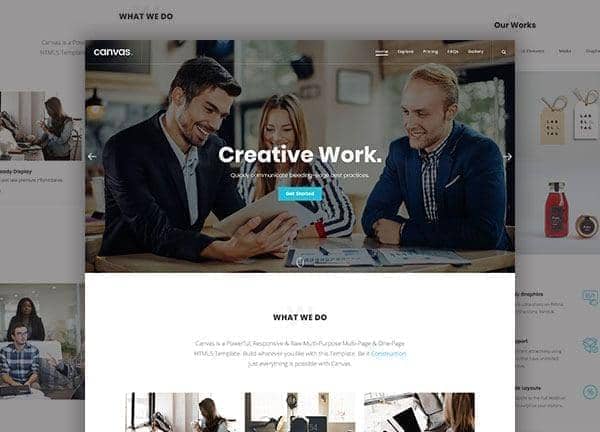
Example output
40
industry templates
1,938+
prompt templates
About 3 minutes
to build a page
Designing a consulting website: what works
Consulting websites are primarily authority-building tools rather than direct conversion mechanisms. The typical consulting sale cycle involves multiple touchpoints (website visit, content consumption, referral, conference presentation) before an enquiry. The website's job is to establish unambiguous expertise and make the next step (call, download, email) obvious and easy.
Expertise Specificity as the Primary Differentiator
Generalist consulting websites that claim competence in everything convert poorly. A clearly defined niche ('Digital transformation for mid-market retail', 'Organisational design for scale-ups', 'Revenue operations for B2B SaaS') attracts the specific clients you can serve best and commands premium fees. Your home page should answer 'who specifically do you help and how?' within 5 seconds.
Thought Leadership as the Core Content Strategy
Senior executives hire consultants whose thinking they know and trust. Publishing detailed POV pieces, frameworks, white papers, and case studies demonstrates the quality of your thinking before a sale begins. A consultant's blog and LinkedIn content are often more powerful sales tools than a sales call, because they scale the consultant's thinking to thousands of potential clients simultaneously.
Case Study Architecture
Case studies are the consulting website's highest-converting content. Structure each with: client context (industry, size, challenge), your approach (methodology, team, timeline), and measurable results ('Increased revenue by 34% over 18 months'). Anonymous case studies with sector context work when clients prefer confidentiality. The more specific the measurable outcome, the more persuasive the case study.
Principal Credibility and Network Signals
In consulting, the principal's credentials are often as important as the firm's. Detailed bios with prior employer logos (McKinsey, Bain, BCG, Big 4 audit firms) or industry roles ('Former CTO at [public company]'), publications, conference talks, and board positions signal the quality of thinking clients are paying for. Advisors and partners from respected institutions amplify this.
Ready to build?
Describe your consulting website in plain English and Canvas Builder builds it, ready to edit and export. No design skills needed.
5 design tips for consulting websites
Define your niche clearly above the fold
The most common mistake on consulting websites is being too vague about who you serve. 'We help businesses grow' attracts nobody. 'We help Series A SaaS companies build revenue operations' attracts exactly the right client at exactly the right stage. Niche specificity is counterintuitively the most effective client acquisition strategy.
Publish a signature framework or methodology
A named, proprietary framework ('The 4D Transformation Model', 'The Revenue Architecture System') differentiates you from generalists, gives clients a concrete sense of your approach, and creates a memorable intellectual property anchor for your expertise.
Lead with case study outcomes, not methodologies
Clients buy consulting for outcomes, not processes. Lead every case study with the result: '$3.2M additional revenue in 8 months'. Then explain how you achieved it. The outcome-first structure grabs attention; the methodology provides evidence of replicability.
Use speaking and media credentials strategically
Speaking at respected conferences (TEDx, industry events, panels) and media appearances (podcast interviews, publication bylines) build authority at scale. Feature these prominently with logos, dates, and links. A consultant who speaks externally is perceived as a market authority, not just a hired hand.
Offer a low-commitment entry point
A free 30-minute strategy call, a downloadable diagnostic framework, or an online assessment tool provides a low-risk first engagement that converts website visitors to warm leads. The entry point should be genuinely useful, not a thinly-veiled sales call.
Try this prompt
Use it as it is, or change the names, colours and sections to match your business.
Create a full-page management consulting website for 'Meridian Strategy Partners', specialising in digital transformation for retail. Use a sophisticated palette of deep slate, warm white, and teal accents. Full solid header. Hero with a confident split layout: left has specific niche statement headline 'Digital Transformation for Retail at Scale', CTA (Book a Strategy Call), and 3 outcome stats. Right has an abstract data visualisation. Services section with 3 core offerings. Case studies with outcome-first presentation. Principal bio with prior employer logos. Thought leadership article cards. And a contact section.Frequently asked questions
What pages does a consulting website need?
Core pages: Home, About (principal bio and firm story), Services/Expertise, Case Studies, Insights/Blog (thought leadership), Speaking/Media, Client Testimonials, and Contact/Enquiry. A Resources page with downloadable frameworks, diagnostics, or white papers is a high-value addition for lead generation.
Should a consulting firm display fees on their website?
For commoditised services (day rates, workshop facilitation, fractional engagements with standard scope): yes, indicatively. For bespoke strategic engagements: describing your engagement model ('project-based', 'retainer', 'fractional') is better than specific fees. 'Typical engagements range from $X to $X depending on scope' pre-qualifies without locking you into fixed pricing.
How do I generate consulting leads without cold outreach?
Inbound consulting lead generation is primarily driven by: (1) Thought leadership content that gets shared in your target market (LinkedIn articles, newsletter, podcast appearances), (2) Referrals from existing and past clients (structured ask process), (3) Conference speaking in your niche, (4) SEO for '[problem] consulting' terms where buyer intent is explicit.
How important is LinkedIn for a consulting business?
Extremely important: LinkedIn is where most B2B consulting discovery happens. Consistent publishing of substantive POV pieces, engagement with target audience content, and a well-optimised profile with specific expertise signals dramatically outperforms most paid marketing for consulting lead generation. Your website should be the depth; LinkedIn is the reach.
Should a solo consultant have a company website or personal brand site?
Both, or a hybrid. A personal brand domain (yourname.com) with your photo, bio, and credentials as the centrepiece tends to build more trust for solo consultants than a firm name that might imply more people than exist. As the team grows, a firm brand site becomes more appropriate. The key is authenticity: don't imply a team larger than you have.
Related templates
Agency Website Templates
Build agency websites that impress prospects and win pitches: featuring case study showcases, service capabilities, team culture, and results-focused conversion design.
View templates →Law Firm Website Templates
Build law firm websites that command authority and convert visitors into clients, with practice area expertise, attorney profiles, and case result showcases.
View templates →Finance & Fintech Website Templates
Build finance and fintech websites that inspire confidence and convert clients, with regulatory credentials, service clarity, interactive calculators, and the authoritative design financial services demand.
View templates →Build your consulting website in minutes
Describe what you need. Canvas Builder writes production-ready Bootstrap 5 HTML on the Canvas design system, ready to publish or export.