Interior Design Website Templates
Create interior design websites that win dream projects, with immersive project portfolios, design philosophy sections, client process guides, and editorial-quality visual presentation.
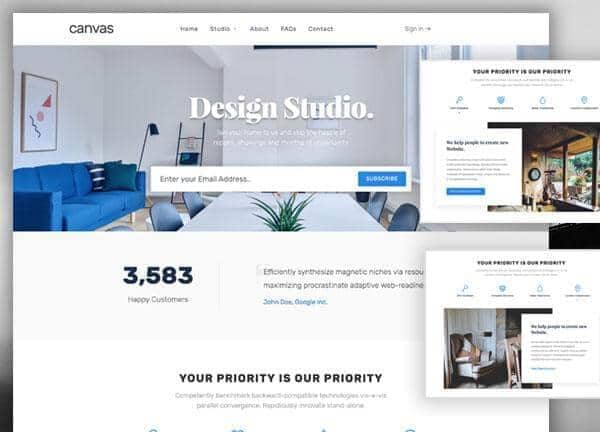
Example output
40
industry templates
1,938+
prompt templates
About 3 minutes
to build a page
Designing an interior design website: what works
Interior design websites are proof-of-concept for the designer's taste. Prospective clients use the website to answer a single question: 'Does this designer's aesthetic align with what I want in my own space?' Every design choice (layout density, typography, colour palette, photo treatment) is a direct demonstration of the designer's sensibility.
Portfolio as the Primary Product
Large, uncluttered project photography should dominate. Use full-bleed room shots, detail close-ups, and before/after comparisons to tell each project's story. Organise by style (contemporary, coastal, classic, industrial) or by project type (residential, commercial, hospitality). The portfolio page is where most prospective clients make their decision.
Design Philosophy and Brand Positioning
The 'About' section on an interior design website carries unusual weight: clients are choosing someone to transform their lived environment, which is deeply personal. A clearly articulated design philosophy ('We create spaces that whisper rather than shout'), practice story, and designer profile with genuine personality builds the trust required for high-engagement commissions.
Services and Process Transparency
Many prospective clients don't know how interior design engagements work: they may not know what e-design is vs full-service, or what an initial consultation involves. Clear, jargon-free descriptions of your service tiers, process steps, and typical investment ranges (where applicable) dramatically reduce consultation no-shows and mismatched client expectations.
Mood Boards and Style Exploration Tools
Interactive or downloadable style quizzes and mood board showcases serve double duty: they engage prospective clients, educate them about your aesthetic range, and generate qualified leads (clients who engage with style exploration tools have 2 to 3x higher consultation conversion rates). They also provide email capture opportunities.
Ready to build?
Describe your interior design website in plain English and Canvas Builder builds it, ready to edit and export. No design skills needed.
5 design tips for interior design websites
Invest in professional architectural photography
The quality of your photography directly signals the quality of your work to prospective clients who have never entered your spaces. An interior photographer who understands light, staging, and composition makes your projects look 50 to 100% more impressive than phone photography of the same room.
Create project pages, not just galleries
Each significant project deserves its own page: client brief, design concept, challenges, material palette, and outcome. Prospective clients who read a full project story have a qualitatively different level of confidence than those who only see photos.
Show your distinctive design voice
Generic design portfolio websites that try to show range without style are often less effective than those with a clear, opinionated aesthetic signature. Clients who love your specific aesthetic will convert at higher rates than those who see you as 'acceptable but not distinctive'.
Offer an e-design service for entry-level clients
A more accessible e-design or online consultation service (room concept board, furniture plan, shopping list) expands your market to clients who can't afford full-service design. It also creates a pipeline for clients who grow into full-service commissions.
Feature your sourcing and craft relationships
Showroom partnerships, artisan relationships, and access to trade-only resources signal the added value of working with a professional designer. A 'How we source' or 'Our favourites' section builds perceived value and differentiates you from DIY decor alternatives.
Try this prompt
Use it as it is, or change the names, colours and sections to match your business.
Create a full-page interior design studio website for 'Studio Holm', a contemporary residential design firm. Use a refined palette of warm greige, deep charcoal, and brushed brass accents. Minimal clean header. Hero with a stunning full-bleed living room photograph and understated headline 'Spaces That Live With You'. A filterable project portfolio grid (Residential, Commercial, Hospitality). Individual project feature section with design story. About the designer section with portrait photo and philosophy statement. Services with 3 tiers. A style quiz CTA. And an enquiry form.Frequently asked questions
What pages does an interior design website need?
Core pages: Home, Portfolio (filterable by style/project type), Individual Project Case Studies, About/Design Philosophy, Services (full service, e-design, consultation tiers), Process, Investment/Fees, Contact/Enquiry, and a Blog or Journal. A Style Quiz page is an increasingly common and highly effective lead generation tool.
Should an interior designer show prices on their website?
Indicative investment ranges are better than hiding pricing entirely. 'Residential projects typically start from $X for consultation and concept phase' pre-qualifies enquiries and prevents time wasted on clients outside your fee range. Hourly or project fee structures can be explained without committing to exact quotes before scope is defined.
How do I get interior design clients from my website?
The highest-converting strategy: a powerful portfolio combined with a clear, specific contact form and quick response. Interior design clients typically shortlist 3 to 5 designers: being the first to respond with warmth and professionalism wins a disproportionate number of consultations. Speed of response matters as much as portfolio quality.
How do I showcase a project that hasn't been professionally photographed?
Render visualisations, progress photography, material flat lays, and mood boards can substitute or complement final photography in the portfolio. If you're waiting for photography, you can tease the project with in-progress shots and note 'full imagery coming soon'.
What's the best way to attract luxury interior design clients?
Luxury clients discover designers through: (1) personal referrals from existing clients, (2) editorial features in shelter magazines (Architectural Digest, House & Garden, local equivalents), (3) Instagram with consistent luxury aesthetic content, (4) Show home commissions. Your website should feel as premium as the clients you want to attract: presentation quality signals market positioning.
Related templates
Real Estate Website Templates
Create professional real estate websites with property search, agent profiles, neighbourhood guides, and high-converting lead capture, built for buyers and sellers alike.
View templates →Hotel & Hospitality Website Templates
Create hotel and resort websites with immersive photography, room showcases, amenity highlights, and direct booking CTAs that compete with OTAs for every reservation.
View templates →Construction Website Templates
Build construction and building company websites that win contracts, with project portfolios, service showcases, trade credentials, and client testimonial sections.
View templates →Build your interior design website in minutes
Describe what you need. Canvas Builder writes production-ready Bootstrap 5 HTML on the Canvas design system, ready to publish or export.