Crypto & Web3 Website Templates
Build crypto and Web3 project websites that attract investors and community, with tokenomics, roadmaps, team credibility, and the bold aesthetic that signals serious blockchain execution.
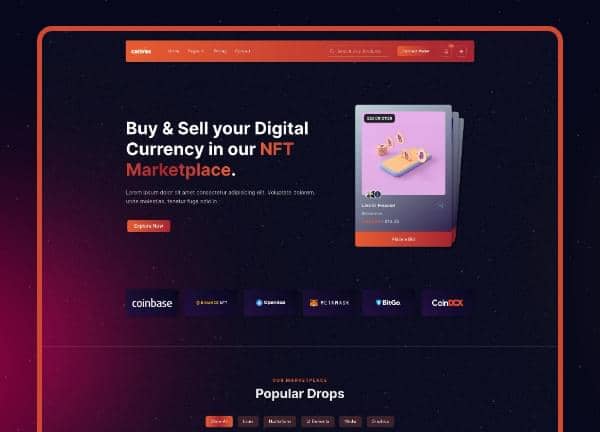
Example output
40
industry templates
1,938+
prompt templates
About 3 minutes
to build a page
Designing a crypto & Web3 website: what works
Crypto and Web3 websites operate in a trust-deficit environment. The space is littered with rug-pulls, vaporware, and anonymous teams: your design must work harder than almost any other niche to establish legitimacy. Bold, technically competent design combined with radical transparency about team, tokenomics, and audits is the formula.
Aesthetic Language of Web3 Credibility
Dark backgrounds with vibrant gradients (purple to blue, green to cyan), sharp geometric elements, and precise technical typography signal serious crypto-native design. Avoid anything that looks like a generic startup template: the crypto community can identify a CMS theme in seconds, and it undermines credibility. Custom, intentional design signals execution quality.
Tokenomics Transparency
Clear, visual tokenomics presentation (supply breakdown, vesting schedules, allocation percentages shown as charts) is among the most important content on any crypto project site. Investors specifically look for tokenomics clarity as a rug-pull risk signal. Hidden or confusing token distribution is a major red flag that serious investors will flag immediately.
Roadmap as Commitment Signal
A specific, time-bound roadmap with completed milestones marked distinguishes serious projects from vapourware. Show what you've already shipped ('Audit completed Q1', 'V1 mainnet live'), what you're building ('V2 governance module Q3'), and your longer-term vision. Vague roadmaps without dates erode trust.
Team Doxxing and Partner Legitimacy
Anonymous teams are a major risk signal in crypto. Full team profiles with LinkedIn links, GitHub handles, and prior project credentials command significantly more investor confidence than pseudonymous identities. Audit reports from respected firms (Certik, Trail of Bits, Consensys Diligence) and exchange partnerships displayed prominently complete the legitimacy picture.
Ready to build?
Describe your crypto & Web3 website in plain English and Canvas Builder builds it, ready to edit and export. No design skills needed.
5 design tips for crypto & Web3 websites
Publish your smart contract audit
A completed security audit from a respected firm, with the report linked directly on your website, is one of the most powerful credibility signals in crypto. Projects with published audits convert institutional and retail investors at dramatically higher rates.
Use a live token metrics widget
Embed real-time price, market cap, volume, and holder count data from CoinGecko or your blockchain explorer. Live data demonstrates that your project is real and active, and gives investors the metrics they check before engaging.
Build community section into the homepage
Discord member count, Twitter followers, and Telegram group size displayed as live metrics signal community health. Links to each community platform with brief descriptions of what each offers (Discord for technical discussion, Twitter for announcements) help funnel community members to the right channels.
Create a visual tokenomics diagram
A clean pie chart or bar chart showing exact token allocation percentages (team, ecosystem, community, investors, reserve) with vesting schedule details is required content for any serious crypto project. Visualise it: don't just describe it in text.
Show completed milestones on your roadmap
A roadmap that includes checked-off completed items alongside future milestones shows momentum. Investors want evidence of execution ability: a track record of delivering on stated milestones is stronger than any future promise.
Try this prompt
Use it as it is, or change the names, colours and sections to match your business.
Create a full-page DeFi protocol website for 'LiquidFlow Protocol', a decentralised cross-chain liquidity layer. Use a dark background with vibrant cyan and purple gradient accents. Floating transparent dark header. Hero with animated particle background, bold headline 'Unlock Omnichain Liquidity', and two CTAs (Launch App, Read Whitepaper). A live metrics strip (TVL, daily volume, chains supported). Feature section with 4 technical pillars. Tokenomics pie chart section. A visual roadmap. Team profiles with external links. Audit badge from Certik. And community section.Frequently asked questions
What pages does a crypto or Web3 project website need?
Core pages: Home, About the Project, Tokenomics, Roadmap, Team, Whitepaper (PDF + summary), How to Buy, Community, and Audit Reports. DeFi protocols need dedicated documentation and developer API pages. NFT projects need a Mint page and collection showcase.
How do I make my crypto project website look legitimate?
Five legitimacy signals: (1) Full KYC team profiles with external links, (2) Published security audit from a recognised firm, (3) Clear tokenomics with vesting schedules, (4) Specific roadmap with completed items marked, (5) Registered legal entity information. Anonymous teams, hidden tokenomics, and vague roadmaps are the three biggest red flags.
Should a crypto project have a whitepaper?
Yes, a whitepaper (or at minimum a detailed litepaper) is expected by serious investors. It should cover: problem being solved, technical solution, tokenomics, team, roadmap, and competitive landscape. A well-written whitepaper that clearly explains the protocol differentiates technical projects from pure speculation plays.
What's the most important trust signal for a new crypto project?
A completed security audit from a respected firm (Certik, Trail of Bits, OpenZeppelin, Consensys Diligence) is generally considered the single most important trust signal, especially for DeFi protocols where smart contract vulnerabilities have historically resulted in major exploits.
How do I handle the legal/regulatory aspect of my crypto website?
At minimum: include a clear disclaimer that the project does not constitute an offer of securities, consult a crypto-specialised legal firm about your jurisdiction's requirements, and avoid making return or profit guarantees. For tokens that may be securities, a compliant offering structure and restricted access by jurisdiction is essential.
Related templates
SaaS Landing Page Templates
Build conversion-optimised SaaS landing pages with feature showcases, pricing tiers, testimonials, and compelling CTAs, all generated from a single prompt.
View templates →Startup Website Templates
Build startup websites that attract users, investors, and press: featuring product demos, founder credibility, waitlist capture, and clean modern design that signals serious execution.
View templates →AI Tool Website Templates
Build AI product websites that convert, with live demo showcases, before/after comparisons, technical feature grids, and modern design language that signals serious AI engineering.
View templates →Build your crypto & Web3 website in minutes
Describe what you need. Canvas Builder writes production-ready Bootstrap 5 HTML on the Canvas design system, ready to publish or export.